1. Description
Given an integer numRows, return the first numRows of Pascal’s triangle.
In Pascal’s triangle, each number is the sum of the two numbers directly above it as shown: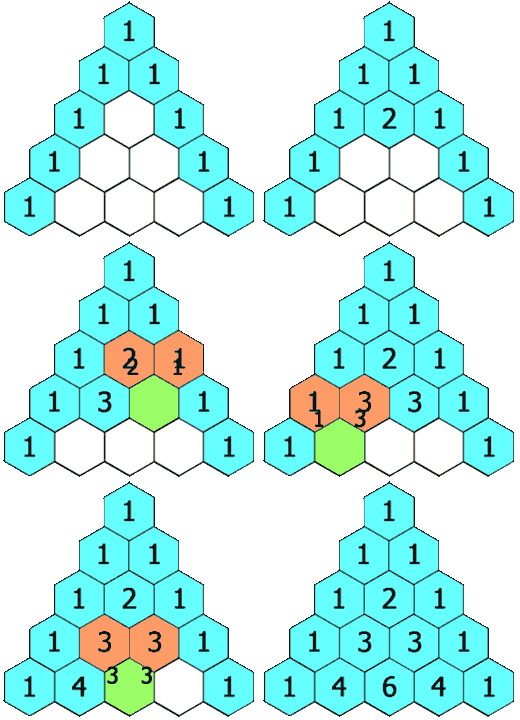
2. Example
Example 1
Input: numRows = 5
Output: [[1],[1,1],[1,2,1],[1,3,3,1],[1,4,6,4,1]]
Example 2
Input: numRows = 1
Output: [[1]]
3. Constraints
- 1 <= numRows <= 30
4. Solutions
Bit Manipulation
n = numRows
Time complexity: O($n^2$)
Space complexity: O($n^2$)
| |